



How to Choose the Right Sanitary Pad Packaging Machine for Your Production Line
2026-08-26 20:00For sanitary pad manufacturers, packaging is no longer just the final step of production. It directly affects production efficiency, labor costs, product appearance, packaging quality, and ultimately the competitiveness of the brand.
As hygiene product markets continue to develop, more manufacturers are looking for reliable sanitary pad packaging machine solutions that can handle higher production speeds while maintaining stable packaging quality.
However, choosing the right sanitary napkin packing machine is not always easy. Different factories have different production capacities, product specifications, packaging formats, and automation requirements.
This guide explains the key factors manufacturers should consider before investing in a sanitary pad packing machine.
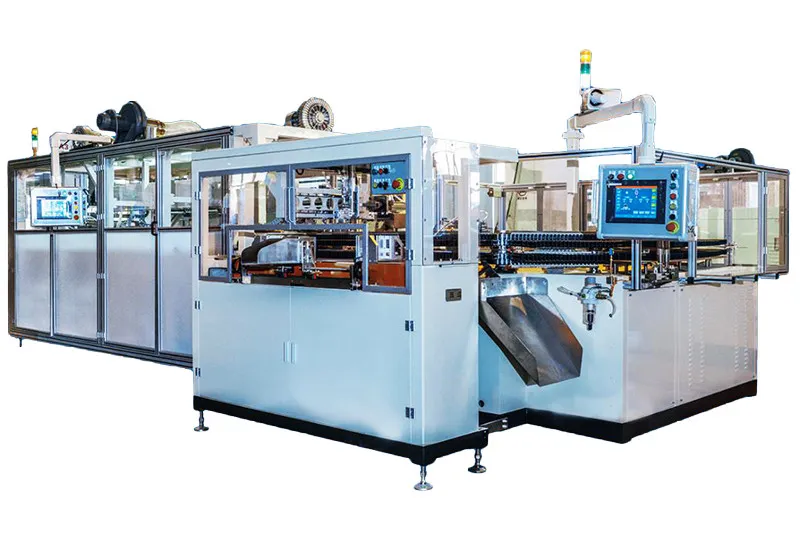
1. Start with Your Production Capacity
The first question is simple:
How many sanitary pads does your factory need to package every minute?
A packaging machine should match the capacity of your upstream production line. If the packaging system is too slow, it can become the bottleneck of the entire factory.
When selecting a sanitary pad packaging machine, buyers should evaluate:
Production speed
Number of sanitary pads per package
Single-pack or multi-pack requirements
Future production expansion
Connection with existing production equipment
For example, some automatic packaging systems can handle different quantities of sanitary pads in one package, while customized configurations can be designed according to the customer's production requirements.
The goal is not simply to purchase the fastest machine. The right solution should provide stable operation and match the overall capacity of the production line.
2. Choose the Right Packaging Format
Different markets require different packaging styles.
Some manufacturers prefer roll film packaging because it can support continuous automatic bag making. Others use pre-made bags to achieve a premium retail appearance.
A professional sanitary napkin packaging machine should be able to support packaging solutions based on:
Roll film
Pre-made bags
Single-stack packaging
Multi-stack packaging
Horizontal packaging
Vertical packaging
Different bag sizes
Different product quantities
For manufacturers supplying multiple brands or markets, packaging flexibility is particularly important.
A machine that can quickly adapt to different product specifications can help reduce changeover time and improve overall factory efficiency.
3. Automation Can Reduce Labor Costs
Manual packaging requires operators to perform repetitive tasks such as counting, stacking, loading, and sealing.
As production volume increases, manual operations can create several problems:
Higher labor costs
Inconsistent packaging quality
Incorrect product quantities
Slower production
Higher risk of packaging defects
An automatic sanitary napkin packaging machine can integrate multiple processes into one system.
Depending on the configuration, the system can automatically complete:
Product counting
Product stacking
Product feeding
Bag forming or bag opening
Product loading
Sealing
Finished product discharge
This allows manufacturers to reduce manual intervention and improve production consistency.
For high-volume hygiene product factories, automation can also make production planning easier because packaging output becomes more predictable.
4. Packaging Quality Is Critical for Brand Image
Consumers may not see the production line, but they immediately see the finished package.
Poor sealing, incorrect bag shapes, unstable stacking, or inconsistent package sizes can negatively affect a brand.
Therefore, when selecting a sanitary pad packing machine, buyers should pay attention to:
Sealing quality
Bag appearance
Product alignment
Stack stability
Counting accuracy
Package consistency
A good packaging system should not only run fast. It should also maintain consistent quality throughout long production cycles.
For sanitary product manufacturers supplying supermarkets, distributors, and international brands, packaging consistency is often just as important as production speed.
5. Consider Future Product Development
The hygiene product market continues to evolve.
Manufacturers may introduce:
Different sanitary pad sizes
New packaging designs
Premium product lines
Economy packs
Larger multi-packs
Customized retail packaging
For this reason, investing in a highly flexible sanitary pad packaging machine can provide long-term advantages.
Before purchasing equipment, buyers should discuss the following requirements with the manufacturer:
Product dimensions
Package dimensions
Number of products per package
Packaging materials
Required production speed
Future product plans
Customized automation can help manufacturers avoid purchasing completely new equipment every time their product specifications change.
From Stand-Alone Machines to Complete Packaging Lines
For many factories, the best solution is not simply one machine.
A complete automated packaging line may include:
Automatic stacking systems
Counting systems
Feeding systems
Bag packaging machines
Case packing machines
Conveying systems
Customized automation equipment
By integrating multiple processes, manufacturers can create a more efficient production flow from finished sanitary pads to packaged products ready for shipment.
Gachn provides customized packaging solutions for disposable hygiene products, including sanitary pads, pantyliners, baby diapers, wet wipes, tissue products, and other related applications. The company combines packaging equipment development, manufacturing, technical support, installation, and training to support different factory requirements.